
Indian equity benchmark indices, Sensex and Nifty, tumbled nearly 2 per cent for the fourth consecutive session, driven by elevated crude oil prices, escalating US-Iran tensions, unabated foreign fund outflows, and a depreciating rupee.

India's exports experienced their steepest fall in five months, declining by 7.44 per cent in March to $38.92 billion, primarily due to trade uncertainty and geopolitical tensions, with shipments to West Asia contracting by over 50 per cent.
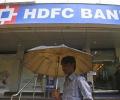
HDFC Bank reported an 8.04 per cent increase in its March quarter consolidated net profit to Rs 20,350.76 crore, but highlighted potential near-term risks for small-business borrowers due to the West Asia conflict. The bank's CEO also addressed the recent resignation of its non-executive chairman and hinted at a potential top-level reorganisation.

The deployment could include infantry and armoured units, in addition to the 82nd Airborne Division, which is already stationed in the region.
Indian equity benchmark indices experienced a significant drop in early trade, with the BSE Sensex falling over 525 points and the NSE Nifty down more than 164 points, primarily due to rising crude oil prices and ongoing uncertainty surrounding the US-Iran conflict.

Indian hotel companies are experiencing a sharp correction in share prices due to the Iran war and broader geopolitical tensions, leading analysts to cut operating profit expectations and valuations, despite structurally positive medium-term prospects.

Indian restaurants are grappling with a severe LPG shortage due to the West Asia conflict, forcing them to innovate with menus and cooking methods or face potential closures, impacting the food industry and consumers across the country.

Prime Minister Narendra Modi will review the impact of the West Asia conflict on India's food, energy, and fuel security with senior cabinet ministers. The meeting follows previous discussions and concerns raised about global energy crises and supply chain disruptions.

West Asia conflict triggers sharp sell-off in Indian markets, with realty, banking and auto stocks leading losses amid energy shock fears.

External Affairs Minister S Jaishankar and his Iranian counterpart Abbas Araghchi held talks focusing on the West Asia crisis and its impact on energy supplies and maritime stability.

'If the war continue for a longer period of time, it is just a matter of time before the government will pass on some of the price increases.'

The threat has raised concerns about possible asymmetric attacks outside the region. Iran has also stepped up attacks on energy infrastructure in Gulf countries.
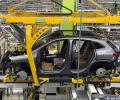
Domestic passenger vehicle dispatches in India reached a record 12,73,811 units in the first quarter of FY27, marking a 25.9 per cent growth, driven by robust domestic demand despite geopolitical headwinds, according to SIAM.

Titan will continue investments, even as it notes it is too early to assess how customer sentiment and store footfalls will be impacted by the Prime Minister's appeal to reduce gold consumption and the recent hike in import duty.

Passenger vehicle sales in India are estimated to have surged by nearly 25 per cent in June 2024, reaching approximately 4 lakh units, with Maruti Suzuki, Tata Motors PV, and Mahindra & Mahindra leading the growth, despite concerns over geopolitical tensions and monsoon impact.

A lesson for India is to clearly define objectives beforehand, so that the adversary or other parties do not attempt to mitigate them midway.

'The March correction was clearly due to the war and with prospects of that coming to a conclusion, there is a natural rally.'

Benchmark indices tumbled about 2 per cent on Friday, capping one of the most turbulent weeks for domestic equities as investors fretted that the West Asian conflict could drag on for weeks or even months.

The World Bank has increased India's economic growth projection for FY27 to 6.6 per cent, citing resilient domestic demand, while simultaneously cutting its global economic growth outlook due to the conflict in West Asia.

Tensions in West Asia have dramatically escalated as Israel launched targeted military operations against Iran, triggering widespread blasts across strategic cities, following earlier Iranian projectile attacks on Israel.

The Indian government has waived customs duty on critical petrochemical products until June 30 to ensure supply stability and provide relief to consumers amid disruptions caused by the crisis in West Asia.

'Markets never fully lose hope. But an important shift could come if the Strait remains closed -- moving from high prices to no prices.'

Analysts are revising down India Inc's financial year 2026-27 (FY27) earnings growth forecasts, citing persistently high crude oil prices above $100 a barrel due to the West Asia conflict, which is expected to dent corporate financial performance in the coming quarters.

"The world might face a food crisis if the war continued till the end of April, as it could have a dramatic impact on planting in Europe and North America," said Matt Simpson, CEO of Brazil Potash.
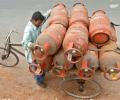
Argentina has significantly increased its LPG exports to India to help mitigate shortages caused by the ongoing conflict in West Asia. This partnership is becoming increasingly important for India's energy security.

'FPIs are unlikely to return unless there is equilibrium between valuation premium and earnings growth.'

Increased input costs due to geopolitical conflict in West Asia and unseasonal rain in March negatively impacted volumes of consumer durables makers, particularly air conditioners, in Q4FY26, leading to projected declines in EBITDA and APAT despite revenue growth.

Kerala is facing increased inflationary pressure due to recent hikes in petrol and diesel prices, according to Chief Minister V D Satheesan. The state's economy is also impacted by the decline in remittances from the Gulf and higher oil prices.
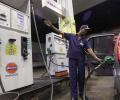
Despite international crude oil prices falling to a four-month low, retail petrol and diesel prices in India are unlikely to be cut immediately because state-run refiners are still processing costlier crude purchased during the peak of the West Asia crisis, Oil Minister Hardeep Singh Puri said.

The International Monetary Fund (IMF) has reduced India's growth forecast for FY27 to 6.4 per cent, citing the potential impact of higher energy prices offsetting the country's economic resilience. Despite this, India remains among the fastest-growing major economies.

Nobody takes Pakistan seriously and therefore Pakistan's sudden mediating with almost immediate results of a ceasefire seems more contrived than real, points out Vice Admiral Biswajit Dasgupta (retd).
India's exports reached a six-month high, growing by 18 per cent to USD 45.2 billion in May, driven by electronic goods, petroleum products, engineering items, and pharmaceuticals. However, the trade deficit widened to USD 28.21 billion due to a 10 per cent rise in imports, particularly petroleum products and gold, amidst surging crude oil prices.

The Nifty IT index has been one of the worst sectoral performers in calendar year 2026, losing nearly 29 per cent till date compared to the 8 per cent dip in the Nifty 50 index.

Indian benchmark indices Sensex and Nifty advanced in early trade, driven by renewed foreign fund inflows and a significant drop in crude oil prices to pre-war levels, signalling an uptrend in the market. Track Sensex, Nifty on July 7, 2026.

Companies are already diversifying sourcing, raising prices, and reworking operating models as the disruption drags on.

A potential US-Iran peace deal, expected to be signed on June 19, is anticipated to ease geopolitical stress and benefit various sectors, particularly in India, with analysts suggesting investors await finer details before making significant moves.

The Indian government has imposed a new windfall gains tax of Rs 3 per litre on petrol exports, while simultaneously reducing the levy on diesel to Rs 16.5 per litre and aviation turbine fuel (ATF) to Rs 16 per litre, effective May 16.

Opposition parties are demanding a full Parliament discussion on the West Asia conflict, criticising the government's silence and calling for a contingency plan to protect India's energy security and citizens.

The ongoing Iran-US conflict is casting a shadow over global cricket, potentially disrupting the IPL 2026 due to travel disruptions and logistical challenges.

Aviation fuel prices for domestic airlines remain unchanged, providing stability for local carriers, while commercial LPG and 5-kg cylinders see a significant rate hike due to rising international energy costs.
